
Disseminating knowledge about research developments in neuro-acoustics.
We investigate how various sound frequencies and auditory stimuli impact brain function and emotional states. Our research aims to uncover the therapeutic potential of sound in treating mental health conditions and improving cognitive performance.
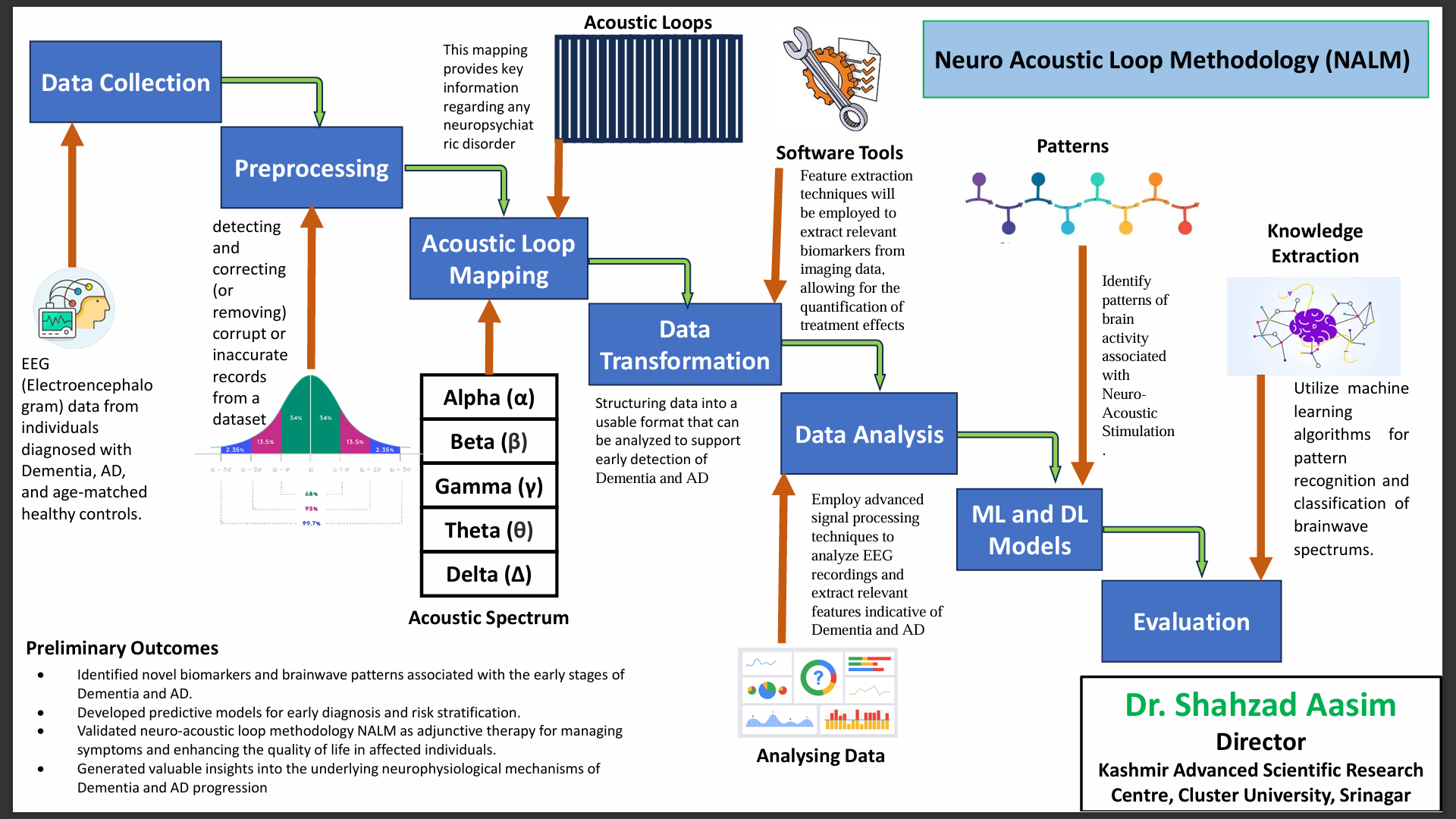
Our team analyzes brainwave patterns to understand their correlation with cognitive processes and emotional responses. By studying these spectrums, we work towards developing neurofeedback therapies and tools that promote optimal brain health and enhance cognitive capabilities.
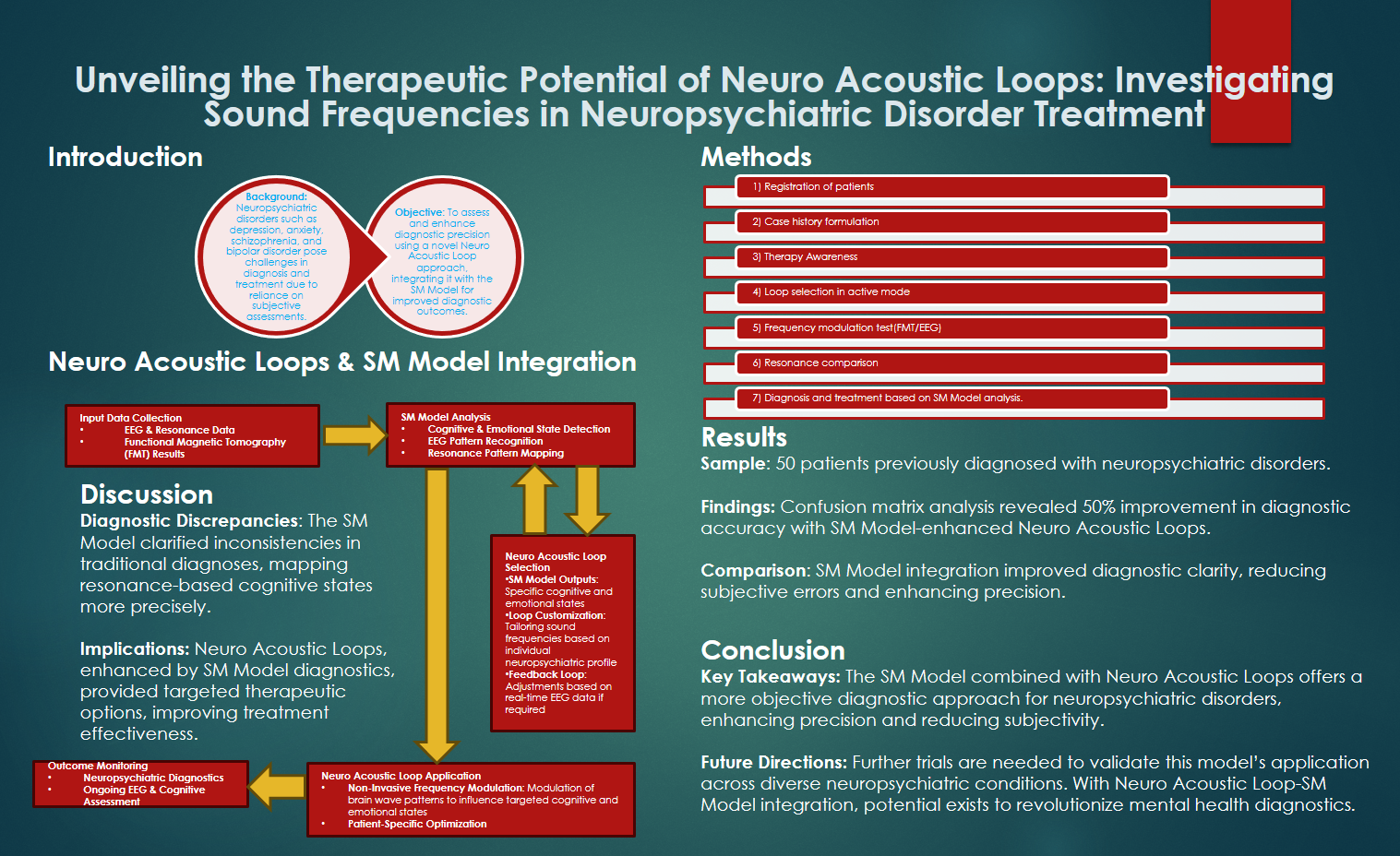
We explore the dynamics of Neuro acoustic feedback systems that utilize sound to engage and stimulate brain activity. Our research focuses on how these loops can be applied in therapeutic settings to support sensory processing, learning, and communication.
Acoustic signals are not transmitted to the brain wholly by contrivances of the ear but influences us through the mediums of skin, bones, and viscera. The ear is awfully subtle to vibrations in the air and conveys the tessellations of these vibrations in a form that the brain distinguishes as sound and speech. The medical devices are being developed that consume high-intensity focused acoustic signals as a non-invasive method for diagnostics and treatment of various psychiatric ailments. The major benefit of these sound or music & acoustic signals that offers the technique so readily to use in non-invasive therapy is its ability to breach deep into the human body and supply to a specific site thermal or mechanical energy with sub-millimetre accuracy.
KASRC actively engages in outreach and educational initiatives to increase public awareness of neuro-acoustics:
Workshops and Seminars: Tailored programs for students, healthcare professionals, and the general public.
Academic Partnerships: Collaborations with local universities to enrich curricula and inspire the next generation of scientists.
Sound-based therapies offer a complementary approach to traditional mental health treatments. These therapies aim to enhance mental health interventions by incorporating auditory elements. The integration of sound aims to provide a novel therapeutic avenue, potentially improving outcomes. While specific techniques vary, the core principle revolves around leveraging the impact of sound on the mind and body to support mental well-being. These interventions may be particularly helpful for individuals who respond well to sensory-based therapeutic approaches, offering a less invasive or medication-dependent route to healing. Further research should focus on optimal methods and target populations.
![CU[1]](https://kasrc.res.in/wp-content/uploads/2025/05/CU1-2-scaled.jpg "CU[1]")