
Overview
The Kashmir Advanced Scientific Research Centre (KASRC) is a Semi government multidisciplinary research institution dedicated to advancing scientific knowledge, innovation, and technological development in the region. Established with the visionary leadership of Dr. Shahzad Aasim, a distinguished music scientist specializing in musicology and neuro-acoustics, the Centre was founded to promote interdisciplinary research and explore the scientific foundations of music, cognition, acoustics, and emerging scientific domains.
KASRC serves as a collaborative platform for researchers, scholars, and academic institutions to address complex regional and global challenges through scientific inquiry and innovation. With academic engagement and institutional support from universities and government academic frameworks in Jammu & Kashmir, the Centre strives to foster a culture of research excellence, knowledge exchange, and evidence-based advancement in science and technology.




Chronology
2019 — Establishment of KASRC
The Kashmir Advanced Scientific Research Centre (KASRC) was established as an independent scientific research society to promote multidisciplinary research and innovation in Jammu & Kashmir. The centre was registered under the Societies Registration Act VI of 1998 (1941 A.D.) with its registered office near Government Degree College Sumbal, Bandipora.
2019 — Initiation of Research Activities
With institutional support from the Higher Education Department, Government of Jammu & Kashmir, KASRC initiated its research and academic activities at the JK Institute of Mathematical Sciences (JKIMS), Amar Singh College Srinagar, creating a platform for collaborative scientific research.
2021 — Expansion at Cluster University Srinagar
As the centre expanded its research programs, Cluster University Srinagar provided space at its main campus, enabling KASRC to establish a dedicated multidisciplinary research facility and strengthen its operational and collaborative research framework.
2022 — National Scientific Recognition
KASRC received Scientific and Industrial Research Organization (SIRO) recognition from the Department of Scientific and Industrial Research (DSIR), Ministry of Science and Technology, Government of India, recognizing the centre’s contribution to scientific research and innovation. The recognition has been renewed until March 2028.
2025 — Institutional Expansion
The Higher Education Department, Government of Jammu & Kashmir, approved the shifting of KASRC to the University of Kashmir, Hazratbal, marking an important step toward expanding research infrastructure and strengthening academic collaboration.
Present — Institutional Status
Today, KASRC functions as a semi-government scientific research institution, supported by the Higher Education Department, Government of Jammu & Kashmir, and working in close collaboration with government universities and academic institutions. The centre conducts interdisciplinary research in emerging fields including Musicology, Cognitive Musicology, Music Psychology, Music Neurology, Psycho-Acoustics, Music Pharmacology, Music Perception, Music Technology, and Neuro-Acoustics.


Research focus of KASRC
The Kashmir Advanced Scientific Research Centre (KASRC) focuses on pioneering research in neuro-acoustics, exploring the complex relationship between sound, brain activity, cognition, and human behavior. By integrating principles from neuroscience, acoustics, psychology, and music science, the Centre investigates how sound-based stimuli influence mental processes and overall well-being.
Key Research Areas
Therapeutic Applications
Research on sound and music-based therapeutic approaches aimed at supporting the management of neuropsychiatric and neurological conditions such as depression, anxiety, PTSD, ADHD, Autism Spectrum Disorder (ASD), dementia, Alzheimer’s disease, and Parkinson’s disease.
Physiological and Cognitive Effects
Studying how different sound frequencies, rhythms, and acoustic patterns affect brain function, cognitive performance, emotional regulation, and mental health.
Diagnostic Innovations
Developing sound-based diagnostic methods to support the early detection of cognitive impairments and neurological disorders, contributing to advancements in neuroscience and preventive healthcare.
Through interdisciplinary collaboration and innovative research methodologies, KASRC aims to advance scientific understanding of sound–brain interactions and contribute to the development of novel research and therapeutic approaches.

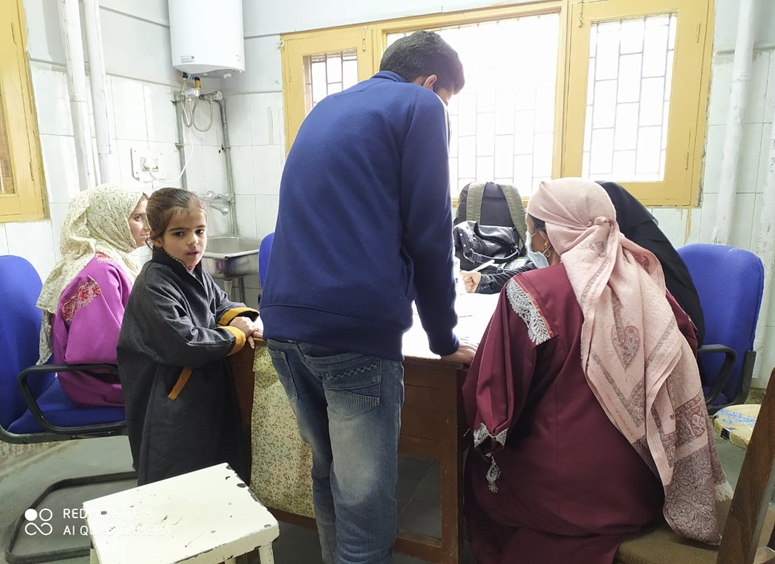
KASRC LABS
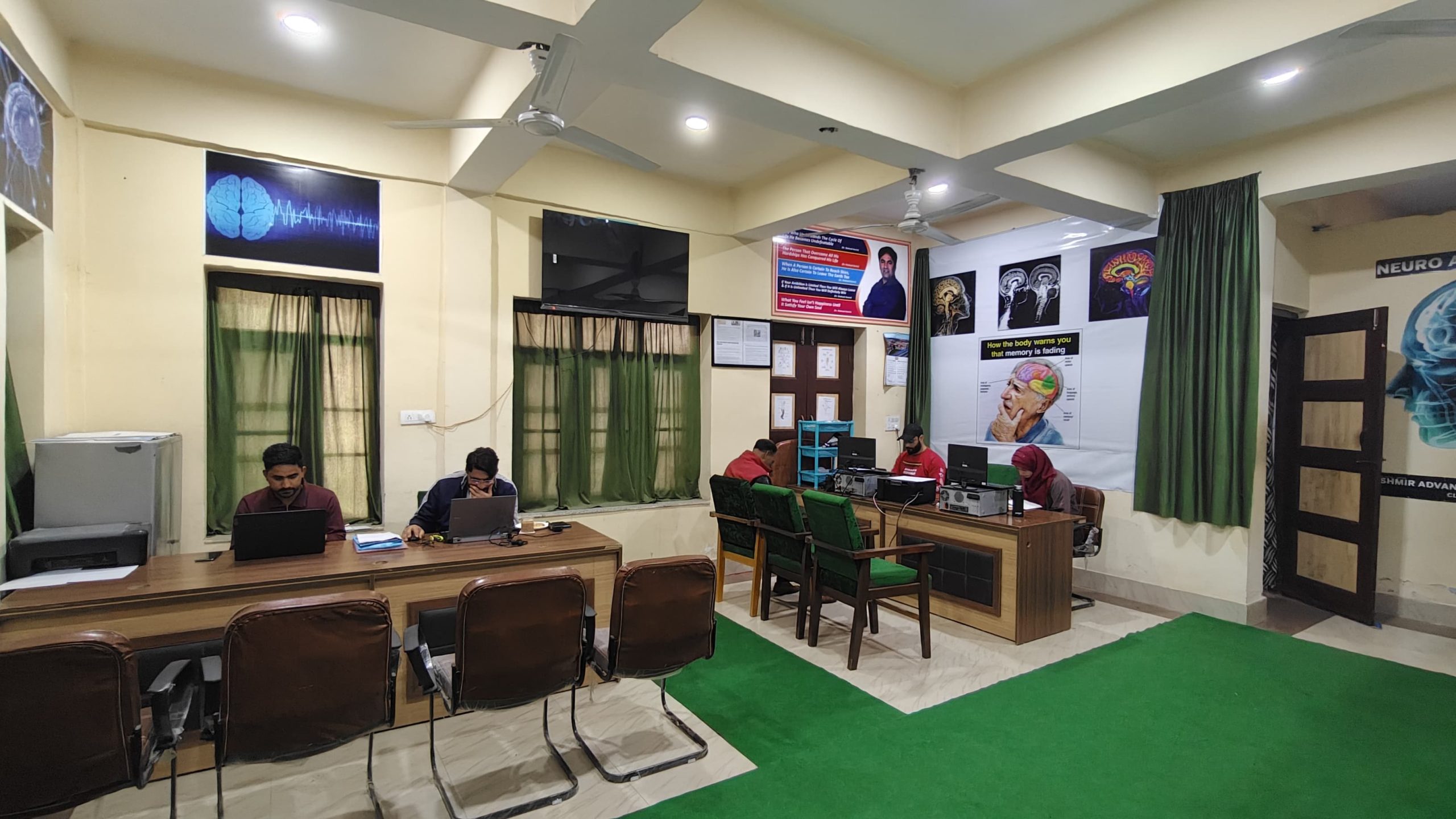
KASRC prides itself on its state-of-the-art facilities, meticulously designed to facilitate cutting-edge research and innovation across multiple disciplines. The center is equipped with an array of specialized laboratories outfitted with advanced instrumentation and technology, catering to the diverse needs of scientific inquiry. Here’s an elaboration on the facilities available at KASRC:
EEG (Electroencephalography) Machines: For non-invasive monitoring of brain activity and studying neural responses to various stimuli.


Sophisticated Sound Analysis Software: Essential for in-depth analysis of acoustic data and sound phenomena, enabling researchers to unravel the complexities of auditory perception.

Brain Photo modulation Machine: Utilized for innovative research in neuro-acoustics and brain modulation techniques.

Acoustic Loop Equipment: Facilitating experiments and studies in sound propagation, acoustics, and psychoacoustics.